Product Updates
Introducing the HealthTasks REST API
Connect clinical education data to the SIS, LMS, CRM, and reporting systems your program already uses.
Product Updates
Connect clinical education data to the SIS, LMS, CRM, and reporting systems your program already uses.
Product Updates
A public benchmark of 9 clinical education management platforms across 28 capabilities, with methodology and source-backed comparisons.
Product Updates
WorkOS-powered SSO and SCIM bring automated user provisioning and directory sync to HealthTasks for enterprise programs.
Product Updates
AI voice clinical simulations with branching scenarios, CJMM-aligned grading, and structured debrief for nursing and allied health programs.
Clinical skills validation should produce measurable improvement, not just documentation. In a live production deployment with 100 entry level nursing students, HealthTasks Vision AI Skills Checkoffs is generating significant, repeatable performance gains across core clinical competencies. This is not a pilot environment or simulated dataset. It is active use inside
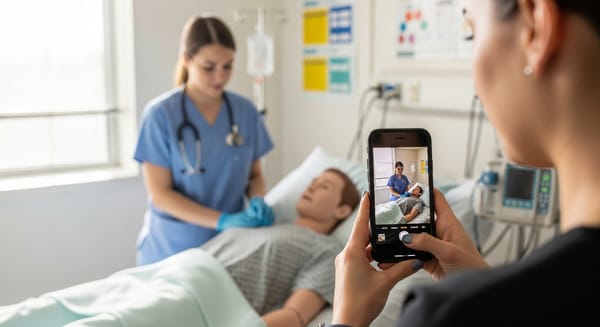
In clinical education, the integrity of a credential depends on the reliability of assessment. As programs evaluate the impact of Vision AI on nursing checkoffs, it is essential to understand two core metrics of assessment consistency: * Inter-Rater Reliability (IRR): The level of agreement between different evaluators. In traditional nursing checkoffs,
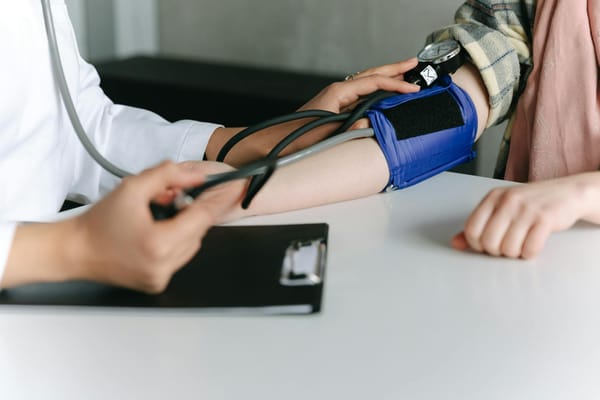
Clinical competency assessment is the most labor-intensive component of healthcare education. Traditional "live" checkoffs suffer from three critical bottlenecks: high faculty-to-student ratios, significant rater variability, and the lack of a permanent, objective evidence chain for accreditation. HealthTasks.ai’s Vision AI Skills Checkoffs addresses these challenges by integrating

Accreditation is the most resource-intensive phase of nursing and allied health program management. Traditionally, drafting self-study narratives requires hundreds of faculty hours spent manually synthesizing disparate data points from clinical logs, curriculum maps, and evaluation rubrics. HealthTasks.ai has introduced AI-Powered Self-Study Narration, shifting the process from manual compilation to
The management of clinical education—from placements and compliance to curriculum mapping and assessment—has become increasingly complex. For Deans, Program Directors, and Clinical Coordinators, relying on spreadsheets and disparate software systems is no longer viable. A Clinical Education Management System (CEMS) is the single, integrated platform designed to handle
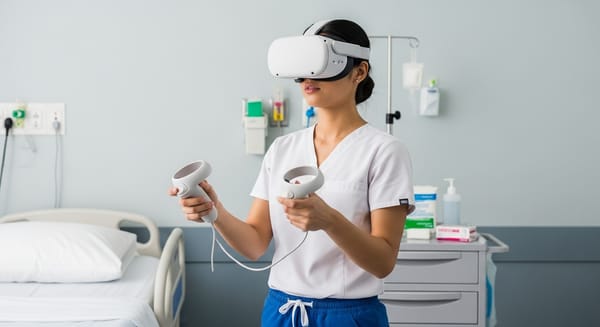
In health education, the adage that "time equals mastery" has long dominated clinical experience documentation. Programs have traditionally relied on Hours Logging, demanding that students spend a prescribed number of hours in a clinical setting to deem them "ready." However, the modern healthcare environment demands a

The days of frantically compiling binders, cross-referencing spreadsheets, and digging through shared drives for accreditation evidence are over. For nursing programs seeking or maintaining accreditation with the CCNE (Commission on Collegiate Nursing Education) or ACEN (Accreditation Commission for Education in Nursing), the site visit has traditionally been a high-stakes, stressful
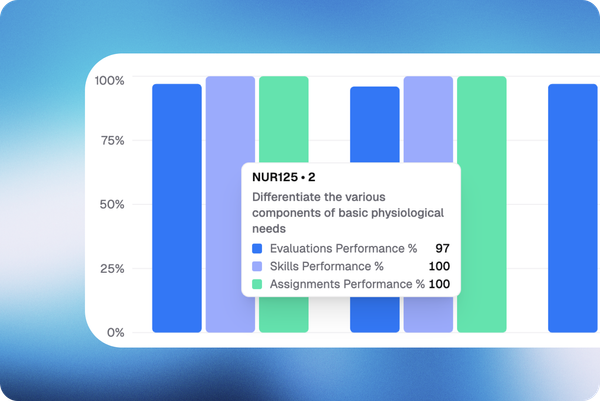
Discover how Accreditation Intelligence helps nursing programs connect classroom learning with clinical performance for seamless accreditation readiness and continuous improvement.
For years, healthcare education leaders have been focused on tracking — tracking student hours, clinical experiences, skills, and evaluations. The ability to collect, organize, and verify that data has become table stakes. But as academic programs mature and accreditation requirements evolve, many deans and administrators are realizing that clinical tracking is

Nursing program directors, faculty, and students all share a common frustration: managing clinical education. The traditional methods—a mix of spreadsheets, paper forms, and endless email chains—are a recipe for administrative overload. They make it nearly impossible to ensure students are meeting accreditation requirements, track their progress in real-time,

Allied health educators face a unique challenge: they must prepare students for a hands-on, fast-paced clinical world while managing a growing mountain of administrative tasks. From juggling multiple programs and clinical sites to ensuring every student meets complex, profession-specific competencies, the administrative burden can feel overwhelming. But what if you

For a long time, the tools of a health educator were simple: a clipboard, a pen, and a mountain of paperwork. While electronic clinical tracking systems (ECTS) digitized that process, many still operate like a digital clipboard—a passive repository of data. But what if your clinical tracking system could